


A worked example shows a problem and a completed path to its solution. In a spreadsheet lesson, that might mean seeing a messy table, the formula chosen, each argument filled in, and the checked result. In coding, it might mean watching a small program move from an error message to a working fix.
That visible path reduces the number of decisions a beginner has to make at once. In their original algebra research, John Sweller and Graham Cooper found an advantage for studying worked solutions over conventional problem solving during early skill acquisition. Read the research context.
The useful part is the reasoning behind each step. If I only copy the characters, the example becomes a transcription exercise. I want to ask: What problem is this step solving? What information told the author to choose it? What would change if the input changed?
Alexander Renkl and colleagues tested prompts that drew learners into explaining worked examples. In an experiment with bank apprentices learning interest calculations, elicited self-explanations supported transfer, particularly near transfer for learners with less prior knowledge. The study did not support the idea that simply showing multiple examples improved transfer under the tested conditions. Read the experiment.
That distinction matters. More examples are not automatically more understanding. Looking at one solution closely can be more useful than collecting ten screenshots you cannot explain.
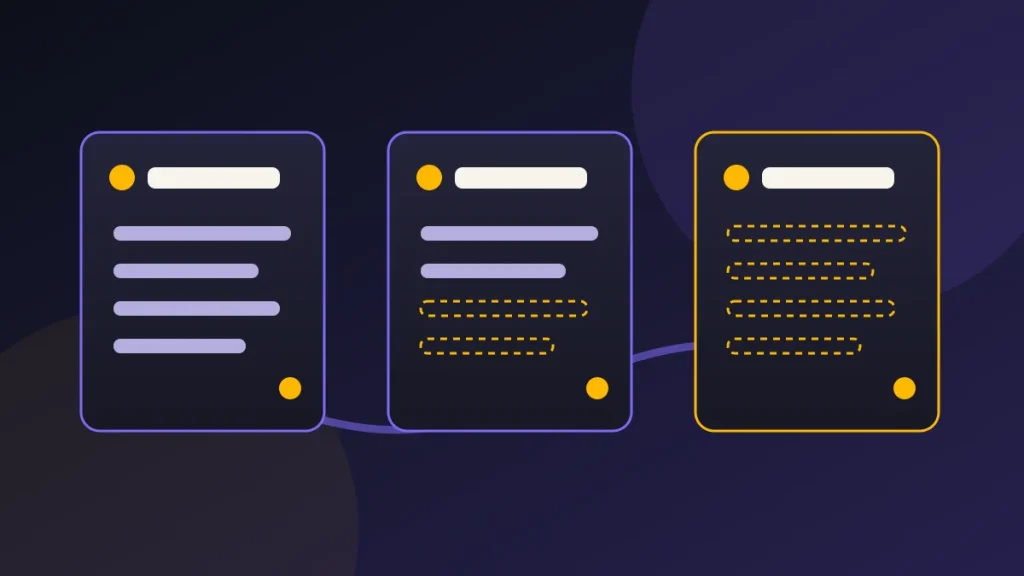
Worked example fading means gradually replacing completed steps with steps you must supply. The first version may show the whole solution. The next may leave the final step blank. Another may leave the last two steps blank. Eventually you face the whole problem without a worked path beside it.
Robert Atkinson, Renkl, and Mary Margaret Merrill studied this transition. Earlier fading research had shown a reliable benefit on near-transfer tasks, while benefits on far-transfer tasks were less reliable. In their two experiments, combining faded steps with prompts to explain the underlying principle improved both near and far transfer relative to the comparison in that study. Read the study record.
My practical reading: remove assistance while keeping the reason for each step visible. A missing step tests whether I can perform it. An explanation tests whether I know why it belongs there. Those are different checks.
Suppose I am learning to match customer IDs in one sheet with account owners in another. I could watch a complete tutorial, repeat its exact formula, and feel capable. Then a new workbook arrives with renamed columns and missing IDs.
I would build a short sequence instead:
This is an applied illustration, not a research-tested five-step schedule. It is a way to turn a tutorial into a sequence of decisions I can gradually own. For the later return, use the principles in our article on the spacing effect rather than trusting one fluent session.
Do not use a clock as the gate. Use what you can do.
After studying an example, close it and explain the first decision in ordinary language. If you cannot explain why the solution starts that way, work through the example again. If you can explain and complete the missing step on a similar problem, remove another piece of help.
The point is not to make the task maximally hard. The point is to expose the next decision you are ready to make. When every step is missing and you still know how to begin, it is time for an independent problem.
Research on adaptive fading offers a useful reason to respond to performance rather than follow a rigid schedule. In one laboratory and one classroom experiment with a cognitive tutor, adaptive fading produced better delayed transfer than the two comparison methods used in those studies. That result belongs to a particular learning environment; it is not proof that one universal fading sequence works for every skill. Read the study.
I would use a simple decision rule: if I can explain the choice and complete the missing part twice on meaningfully different cases, I try the next level of independence. That is my practice rule, not a threshold established by the cited experiments.
Support that helps at the start may become redundant later. In some structured tasks, research finds an expertise reversal: as learners gain relevant knowledge, independent problem solving can become more useful than continuing to study completed solutions. But this is conditional. A study of legal case reasoning found worked examples useful for both novice and more advanced law students and did not find an expertise-reversal effect in that less structured task. Read the legal reasoning study.
So I would not announce, “I am intermediate now; examples are bad.” I would ask whether the example still answers a question I cannot answer myself. If yes, use it. If it merely keeps me from choosing the next step, put it away and try the problem.
Our self-explanation guide goes deeper on the habit of explaining a step in your own words. Use that habit here, then test whether your explanation helps you make the same decision in a new case.
Much of the worked-example evidence comes from structured tasks such as algebra, statistics, and technical problem solving. It does not establish an ideal number of examples for every adult learner or show that every creative, interpersonal, or open-ended skill should use the same sequence.
The studies also do not say that struggling longer is always better. If you are guessing without learning from feedback, return to the worked path. If the solution is now obvious before you look, remove more support. The balance changes as your knowledge changes.
Use the example to see a path. Explain why the steps belong. Then hide part of the path and supply it yourself. Continue until the problem, rather than the tutorial, tells you what to do next.
Pick one tutorial you are using this week. Turn its next exercise into a completion problem by hiding the final step. On the following attempt, hide the decision that leads to that step. Then try a new case with the guide closed.
For more practical methods for learning on your own, explore Level Up Smarter.
Level Up Smarter publishes practical, science-informed strategies for learning faster, focusing longer, and building the skills that matter.
Start Here →