


New Drop The Booster Pack is here · Books, supplements, $25 gift card + library access · Get Access — $67/mo ➜

Level Up Smarter · The Flagship Program

Learning to Learn

A four-level, 25-module training that takes you from no study habits at all to
Expert Learner — someone who can enter an unfamiliar field, build real competence
on a schedule, prove it with work other people can see, and install the same
system in someone else.

Other courses tell you the science or sell you motivation.
This program installs the system — and proves it worked.

Twenty founding seats at $97 once, every future update included. Then $49/month.
Artifact-gated, not time-gated: nothing in this program unlocks on a calendar.

4
Levels, beginner to expert
25
Modules, all written in full
22
Artifacts you actually produce
1
Real skill you demonstrate publicly

Start here

You are not bad at learning. You are running an unmanaged process.

You have bought the courses. You have the highlighted books, the saved threads, the
folder of PDFs with hopeful names. Some of it stuck. Most of it didn’t, and you can’t
say why — which is the actual problem.

Learning is not a talent. It is a four-stage process with four specific failure points,
and adults who feel like slow learners are almost always failing at the same two:
they never retrieve, and they never space. They consume material until it feels
familiar, mistake that familiarity for knowledge, and are genuinely surprised six
weeks later when nothing comes back.

This program does not make you feel smarter. It makes the process visible, gives you
the controls, and makes you prove the result on a real skill you pick in week one.

The scientific spine

The Learning Pipeline

Every technique in this program attaches to one of four stages. When learning fails,
it fails at a stage — and you can name which one. That is the whole difference between
studying harder and studying correctly.

STAGE 01

Encode

Getting material in with enough structure that it can be found again. Attention,
prior knowledge, chunking, dual coding, and staying inside the limits of working
memory.

Fails when: attention is split, load overflows, or you review passively.

STAGE 02

Consolidate

Stabilizing the trace over hours and nights. Spacing, sleep-dependent replay, and
the deliberate return visit that turns a fragile trace into a durable one.

Fails when: you cram, skip sleep on learning days, or never return.

STAGE 03

Retrieve

Pulling it back with the source closed. Retrieval is not a test of learning; it is
an event that changes the memory. This is the engine of the entire program.

Fails when: you recognize instead of recall, and call that knowing.

STAGE 04

Transfer

Using it in a situation that is not the practice situation. Varied practice, real
conditions, and an honest accounting of how far a skill actually travels.

Fails when: you only ever practiced in one context, one format, one room.

Driven by the Momentum Method

The pipeline is what happens inside your head. The Momentum Method is what you do with
your hands. Every session, every module, every week runs the same three beats.

Absorb

Optimized encoding. Attention protected, prior knowledge activated, load controlled, material dual-coded.

Apply

Forced retrieval and transfer. Closed sources, self-generated questions, real reps under real conditions.

Advance

Scheduled consolidation. Spacing, interleaving, sleep protection, and the return visit that locks it in.

Why this ordering

Absorb before Apply is obvious. The one people get wrong is Advance: they treat the
return visit as optional revision rather than the step where the memory actually
becomes permanent. Spacing and sleep are not hygiene around the edges of learning.
They are load-bearing.

Why this is different

Five things this program does that others don’t

You leave with proof, not notes

Twenty-five required artifacts. A Skill Map. A question bank you wrote. A
consolidation log. A recorded demonstration of a skill you could not perform
eight weeks earlier. When someone asks what you learned, you open a folder.

Nothing is time-locked

Modules unlock when you submit the artifact — not on a Monday, not after a
seven-day drip. If you do the work in a fortnight, you move in a fortnight.
If life happens, nothing expires and nothing shames you.

Every module starts with a test you will fail

Each module opens with a pretest before any teaching. Getting it wrong is the
point: the gap between your prediction and reality is what makes the correct
answer stick. This is the whole module design, not a gimmick in module one.

It runs on your real skill, not our examples

In Level 2 you charter one skill that matters to your business — cold outreach,
paid media, financial modeling, a new language, a new codebase — and every drill
for the next eight weeks runs on it. There is no “practice material.”

AI is built in as a tool, not a topic

Every module ships a complete, copy-paste AI Amplifier prompt that multiplies that
module’s technique. By Level 3 you assemble them into a personal learning stack: a
tutor that withholds answers, an adaptive question bank, an evening weak-item
selector, a Socratic interrogator, and a calibration tracker.

We name what we refuse to teach

No learning styles. No left-brain/right-brain learner types. No 10x speed reading.
No brain-training games. No 10,000-hour rule. Each of these is addressed directly
in the curriculum with the evidence, because unlearning them is part of the work.

Stated openly

Learning styles. Nearly everyone believes they are a visual, auditory,
or kinesthetic learner. When researchers test the actual claim — that matching
instruction to a stated style improves outcomes — the interaction effect does not
appear. Preference is real. Its benefit is not. We teach dual coding instead, which
works for everyone.

Left-brain / right-brain types. Hemispheric lateralization of specific
functions is real. Whole people being “right-brained” is not. Large connectivity
studies find no evidence that individuals have a dominant hemispheric network.

Speed reading at 10x. Reading speed and comprehension trade against
each other; past roughly double a normal rate you are skimming, and skimming is a
legitimate tool we teach honestly in Level 3 — under its real name.

The 10,000-hour rule. Practice matters enormously and explains far
less of the variance in performance than the slogan implies. We teach the mechanism
— deliberate practice on the weakest sub-component with feedback — not the number.

Why this one is different

Six things almost no other course will do

Not claims about outcomes — claims about the build. Each one is checkable before you
pay, and each one costs us something, which is why they are rare.

01

Every module opens with a test you will fail

Before any teaching. Getting it wrong is the mechanism, not a gimmick — attempting
an answer and missing it makes the correct one stick far better than reading it
cold. Twenty-five modules, 235 questions, every single one with an explanation
that teaches rather than just marking you.

02

You cannot pass by watching

Twenty-five required artifacts, each reviewed by a person against a published
standard. There is no “mark complete” button anywhere. The only way to reach
Module 2.2 is to have produced the thing Module 2.1 asked for.

03

Nothing unlocks on a calendar

No drip, no cohort clock, no expiry. Finish an artifact at 3 a.m. on a Sunday and
the next module opens at 3 a.m. on a Sunday. The gating code contains no
scheduling functions at all — that is enforced by a test, not by good intentions.

04

It runs on your skill, not our examples

In Module 2.2 you charter one real skill — cold outreach, reading a P&L, a new
codebase, a discovery call — and every drill for the next eight weeks runs on it.
There is no practice material anywhere in the program.

05

We tell you what we refuse to teach

No learning styles. No left-brain/right-brain types. No 10x speed reading. No
brain-training games. No 10,000-hour rule. Each is addressed in the curriculum
with the evidence, because unlearning them is part of the work.

06

It ends with proof, not a certificate

A recording of you doing something you could not do eight weeks earlier, judged
against a criterion you wrote yourself in week one — and which we check you did
not quietly soften. A failed demonstration against an honest criterion passes. A
success against a softened one does not.

The uncomfortable part, stated up front

Done properly, this will feel worse than how you study now, and work
several times better. Retrieval practice is harder than rereading. Spacing makes you
slower in the session. Mixing your practice makes you clumsier for a fortnight.
Every one of those is the mechanism working, and every one of them is why people
abandon the methods that actually help.

So the program is built to get you past that: a scored brain-dump every week so you
can watch the number rise while the feeling drops, an intermediate demonstration at
week four so you are never eight weeks from evidence, and a repair rule for the week
you miss. We are not going to tell you it is effortless. We are going to show you
the number.

The full curriculum

Four levels. Twenty-five modules. One system.

Start where you actually are. Level 1 assumes you have never deliberately studied
anything. Level 4 assumes you can run the whole system in your sleep and are ready
to install it in someone else.

01
Beginner · 4 modules · assumes nothing

Groundwork

For someone with no learning habits at all. You will not be asked to build a
spaced repetition system or map a skill. You will be asked to sit down for
twenty-five minutes with one target, twice, and write one page in your own
words. That is the entire ambition, and it is the right one.

You leave with: a two-week session log, a working environment, one real note, and a habit anchored to something you already do.

Badge: LUS Groundwork
4 artifacts
No prerequisites
Level 1 curriculum — 4 modules
1.1

The First Session

What a learning session even is. The 25-minute block, picking one small target, and the rule that matters more than any technique: showing up twice.

Artifact: Session Log, entries 1 and 2

1.2

Attention Basics

Attention is the gate in front of encoding — nothing gets in that attention never touched. Single-tasking, phone physics, and a three-minute environment setup.

Artifact: Environment Photo + setup checklist

1.3

Notes That Work

From transcription to selection. The one-page rule, and your first real contact with putting an idea into your own words — the move that starts doing the work.

Artifact: First One-Page Note

1.4

The Habit Loop

Anchoring three to five sessions a week to routines you already have. Streak repair — how to miss a day without quitting. The beginner’s weekly check-in.

Artifact: Habit Anchor Plan + 2-week Session Log

02
Core · 9 modules · the flagship

Foundations

The heart of the program. In Module 1 you charter one real skill and define
exactly what you will be able to do by Module 8. Every technique after that
runs on that skill — encoding architecture, retrieval, spacing, sleep,
cognitive load, deliberate practice, transfer. In the final module you
demonstrate it live and teach one technique back to the cohort.

You leave with: a skill you can perform on demand, a recorded demonstration, and a one-page Personal Learning Playbook that runs the rest of your life.

Badge: LUS Foundations
9 artifacts
Prereq: Groundwork, or place out
Level 2 curriculum — 9 modules
2.1

The Meta-Skill

Consumption versus acquisition. The Learning Pipeline in full — four stages, four failure modes, four fixes — and the Momentum Method loop that drives it. You diagnose a real learning failure and name the stage it broke at.

Artifact: Pipeline Self-Diagnosis

2.2

The Skill Charter

Neuromyth demolition, with the evidence. Choosing a skill for what it multiplies rather than what interests you. Then the charter sentence and the neutral-judge test that govern the next eight weeks.

Artifact: Skill Charter

2.3

Encoding I: Architecture

Schema theory and chunking. The prior-knowledge activation ritual. Decomposing your skill into 15–25 sub-components across concepts, procedures, and judgments — then finding the critical path.

Artifact: Skill Map

2.4

Retrieval: The Engine

The testing effect and what recall does to a memory. The format ladder, free recall first. Writing your own questions. The 70–85% difficulty zone and think-before-lookup.

Artifact: 25-Question Bank

2.5

Spacing & Interleaving

The forgetting curve and desirable difficulty. The 1-day / 3-day / 1-week / 1-month cadence. Interleaving sub-skills. Setting up an ML-driven scheduler on your own bank.

Artifact: 4-Week Calendar + live scheduler

2.6

Consolidation: The Sleep Edge

Active systems consolidation. Why sleep quality on learning days beats raw duration. The 10-minute pre-sleep weak-item review, nap rules, caffeine timing, and why all-nighters cost you twice.

Artifact: 7-Night Consolidation Log

2.7

Encoding II: Load & Focus

Cognitive load theory made operational. Dual-coded notes that pair words with a diagram you drew. Energy mapping. Opening every session with a prediction or a bet.

Artifact: Dual-Coded Page

2.8

Deliberate Practice & Metacognition

Isolate, intensify, reintegrate. The three-source feedback stack: self-recording, peer, AI or expert. Calibration training — predict, test, compare. The 15-minute weekly audit.

Artifact: Drill Cycles + 2 Weekly Audits

2.9

Transfer & The Demonstration

Varied practice and the honest science of transfer. The live demonstration against the Week-8 criterion you wrote in Module 1. Teaching one technique back. Your Playbook.

Artifact: Demonstration + Personal Learning Playbook

03
Advanced · 6 modules · for graduates

Acceleration

Foundations works on a clean eight-week skill. Real professional learning is
messier: it runs for months, has no textbook, competes with three other
priorities, and plateaus. Acceleration is the system at scale — campaigns,
after-action reviews, a personal AI learning stack, honest reading speed,
plateau diagnosis, and a portfolio of concurrent tracks.

You leave with: a running 90-day campaign, a working AI stack you built and documented, and a quarterly operating rhythm.

Badge: LUS Accelerator
6 artifacts
Prereq: Foundations badge
Level 3 curriculum — 6 modules
3.1

Complex Skill Campaigns

Multi-month skills and why they fail differently. Milestone architecture. Running parallel sub-skill tracks without overloading the pipeline.

Artifact: 90-Day Campaign Plan

3.2

Learning From Raw Reality

Extracting lessons from projects, failures, conversations, and feedback when there is no curriculum. The after-action review as a genuine encoding event.

Artifact: After-Action Review ×2

3.3

The Personal AI Learning Stack

Five roles, five complete prompts: tutor with withheld answers, adaptive question bank, evening weak-item selector, Socratic interrogator, calibration tracker.

Artifact: Working AI Stack + 7 days of logs

3.4

Speed With Integrity

Efficient reading at the true ceiling. Layered passes, source triage, and synthesis notes that hold across a dozen sources without collapsing into mush.

Artifact: Multi-Source Synthesis Note

3.5

Interference, Plateaus & Recovery

Managing similar-skill interference. Diagnosing whether a plateau is an encoding, retrieval, or motivation failure. Deloading, and returning without losing the thread.

Artifact: Plateau Diagnosis

3.6

The Learning Portfolio

Running two or three concurrent tracks on one weekly operating rhythm. Kill criteria for abandoning a track honestly. How skills compound across quarters.

Artifact: Quarterly Portfolio Review

04
Mastery · 6 modules · certification track

Expert Learner

The final level makes you self-correcting. You stop taking our word for
anything and start running experiments on your own system. You calibrate your
confidence until it carries information. You build a lattice of models that
transfer, learn to enter an unknown field in thirty days, and — the real test —
install the whole system in another human being.

You leave with: a documented case study of a sprint you ran for a real person, a self-experiment writeup, and the permanent v2 Playbook.

Badge: LUS Expert Learner
6 artifacts
Certification track
Prereq: Accelerator badge
Level 4 curriculum — 6 modules
4.1

Self-Experimentation

n=1 protocol design: baseline, a single changed variable, a fixed measurement window, an honest evaluation that can come back negative.

Artifact: Experiment protocol + result

4.2

Calibration Mastery

Tracking prediction accuracy across domains until you genuinely know what you know. Expert-level intellectual honesty under uncertainty.

Artifact: 30-prediction calibration ledger

4.3

Mental Model Architecture

Cross-domain schema building, analogical transfer done properly, and a spaced maintenance schedule for the models you have already earned.

Artifact: Model lattice + maintenance schedule

4.4

Rapid Domain Entry

The expert’s protocol for entering an unknown field in thirty days: map the territory, find the critical 20%, locate live feedback, structure week one around retrieval.

Artifact: 30-day entry plan, executed to day 7

4.5

Teaching & Installing the System

The protégé effect at full power. Designing a learning sprint for another person, diagnosing their pipeline failures, and coaching the method without the jargon.

Artifact: Sprint design for a named person

4.6

The Expert’s Operating System

The permanent version: annual learning themes, quarterly campaigns, weekly audits, and a maintenance schedule for everything you already learned. You write your v2 Playbook.

Artifact: Capstone case study + v2 Playbook

Inside every module

Twenty-five modules. One rhythm.

Every module in every level runs the same five beats, in the same order, for the same
reason. Once you have done two, the structure disappears and you are just working.

Beat What happens Why it is there
Pretest You attempt the module’s core question before any teaching. Attempting and failing primes the brain to encode the correct answer far better than reading it cold. Error is the accelerant.
Absorb The lesson: the science plainly stated, then what it means for your skill. Encoding, done properly. Structured, chunked, dual-coded, load-controlled.
Apply A drill run on your own real material — not our examples. Retrieval and transfer. Techniques you only read about do not survive contact with your Tuesday.
Advance A spaced retrieval quiz covering prior modules, plus reflection. Consolidation. This is where the program stops being a course and starts being a system.
Artifact A required submission that unlocks the next module. The only honest proof of learning is something you produced. This is also the gate — the only gate.
AI Amplifier A complete, copy-paste prompt that multiplies the module’s technique. Every technique in this program gets faster with an AI assistant, if you point it correctly. We hand you the exact wording.

What you actually walk away with

The artifact portfolio

Most courses end with a certificate and a feeling. This one ends with a folder. Every
item below is required, produced by you, on your own material, and reviewed before the
next module opens.

Level 1 · Groundwork

  • Session Log — two weeks of dated entries: target, minutes, output, one honest line about what happened.
  • Environment Photo — a picture of the actual place you learn, after the three-minute setup, with the checklist beside it.
  • First One-Page Note — one page, your own words, no transcription, on something you genuinely wanted to understand.
  • Habit Anchor Plan — three to five sessions a week, each anchored to a routine that already exists, with a written repair rule.
Level 2 · Foundations

  • Skill Charter — the skill, the Week-8 demonstration, the constraints, and the “I will be able to…” sentence you sign.
  • Skill Map — 15–25 sub-components across concepts, procedures, and judgments, with the critical path marked.
  • 25-Question Bank — your own questions, in your own words, laddered by format.
  • 4-Week Calendar — spacing cadence and interleaved sessions, plus a live scheduler running your bank.
  • 7-Night Consolidation Log — pre-sleep weak-item review, sleep notes, and next-morning recall scores.
  • Dual-Coded Page — one page where the diagram you drew carries as much as the words.
  • Drill Cycles — isolate / intensify / reintegrate, documented on your weakest sub-component.
  • Two Weekly Audits — fifteen minutes each, with a calibration score and one decision.
  • Demonstration + Playbook — recorded proof against your own Week-8 criterion, and the one-page system you now run.
Level 3 · Acceleration

  • 90-Day Campaign Plan — milestones, parallel tracks, and a load budget that survives a real work week.
  • After-Action Review ×2 — two real events converted into encoded lessons and scheduled retrieval.
  • Working AI Stack — five documented prompts plus seven days of logs proving you used them.
  • Multi-Source Synthesis Note — one page reconciling at least six sources, including where they disagree.
  • Plateau Diagnosis — a named failure stage, the intervention, and the result.
  • Quarterly Portfolio Review — two or three tracks, one rhythm, and an honest kill decision.
Level 4 · Expert Learner

  • Self-Experiment — protocol, baseline, single variable, measurement window, and a verdict you did not pre-decide.
  • Calibration Ledger — thirty predictions with confidence, outcomes, and your Brier-style score over time.
  • Model Lattice — cross-domain models with worked analogies and a spaced maintenance schedule.
  • 30-Day Entry Plan — a new field mapped, the critical 20% identified, feedback sources located, week one executed.
  • Capstone Case Study — a four-week sprint you designed and delivered to a real person, with their results.
  • v2 Playbook — the permanent operating system, in your words, that you will still be running in five years.

A note on the gate

Artifacts unlock modules. That is the only gate in the program. There is no drip, no
expiry, no cohort you can fall behind. If an artifact comes back with a revision
note, that is not a punishment — it is the feedback stage of the pipeline, applied
to you.

Built for

Working adults with a real reason

  • The founder who needs to understand paid acquisition well enough to stop being lied to by an agency.
  • The operator moving into a new industry who has ninety days to sound like they belong.
  • The consultant who has to master a client’s software stack before the engagement starts.
  • The person who has bought eleven courses, finished two, and is done pretending that is a motivation problem.
  • Anyone who has to keep learning for the next thirty years and would like to stop doing it badly.
Not built for

Three people who should not enroll

  • Anyone looking for a shortcut. This program is more efficient than what you are doing now. It is not effortless, and the parts that feel hardest are the parts that work.
  • Anyone who wants theory only. Every module ends in a required submission. If you will not produce the artifact, you will not get past Module 1.2.
  • Students cramming for an exam next week. The system pays off over weeks and compounds over years. Seven days out, you need a different tool.

Questions

Before you enroll

What does it cost, and what is “founding access”?

Twenty founding seats at $97, paid once. Those twenty people get
all four levels and every future update — new modules, revised lessons, new
worksheets and prompt cards — without ever paying again.

After the twentieth seat sells, Learning to Learn becomes $49/month.
That is not a countdown gimmick and there is no timer anywhere on this site. The
limit is twenty because artifact review is done by a person, and twenty is the
number whose submissions can be read properly inside 48 hours while the program is
still being refined. It is a capacity number, not a marketing one.

Founding access is enforced in code, not just promised in copy: your purchase
grants entry permanently, and it keeps working when the program later moves to a
subscription.

How long does the program take?

It takes as long as it takes you, because nothing is time-locked. As a planning
figure: Groundwork runs about two weeks at three sessions a week. Foundations is
designed around an eight-week arc because that is how long a real skill needs to
cross the spacing intervals honestly. Acceleration and Expert are paced by your own
campaigns and typically run a quarter each. Students who try to compress Foundations
below five weeks usually fail the Module 5 consolidation log, because you cannot
fake seven nights.

How much time per week does it actually need?

Three to five sessions a week, twenty-five to fifty minutes each. Call it two to
four hours. That is the floor and, honestly, close to the ceiling — this program is
about the quality of the hour, not the number of them. If you have twenty hours a
week for learning, the system will still tell you to space them out.

I have no background at all. Is Level 1 really enough?

Yes, and it is deliberately unambitious. Level 1 does not teach you spaced
repetition, skill mapping, or retrieval formats. It teaches you to sit down for
twenty-five minutes with one target, twice a week, and write a page in your own
words. Every term is defined on first use. If you have never deliberately studied
anything since school, start there and do not skip it — Foundations assumes you can
reliably produce a session, and that assumption is where most people break.

Can I skip straight to Foundations?

You can place out of Groundwork by submitting its artifact set: a two-week session
log, an environment photo, a one-page note in your own words, and a habit anchor
plan. If you already have a working study habit, that takes a fortnight of logging
and nothing else. If you cannot produce a two-week log, that is the diagnosis, and
Level 1 is the answer.

What skill should I pick for Foundations?

Something real, something you can practice weekly, and something narrow enough to
demonstrate in eight weeks. Good choices: writing cold email that gets replies,
reading a P&L and finding the three numbers that matter, running a discovery call
without a script, building an automation in a specific tool, holding a fifteen-minute
conversation in a target language. Bad choices: “marketing,” “AI,” “leadership.”
Module 2.2 will not let you past a vague charter, and that is the single most
valuable gate in the program.

Do I need an AI subscription?

No. Every module is complete without one. The AI Amplifier card is an accelerant,
not a dependency, and every prompt is written to work on any competent assistant.
Level 3 Module 3 is the one place where a capable model materially changes what is
possible, and even there the manual fallback is documented.

Is this based on real research, or is it repackaged productivity advice?

Every technique in the program maps to a named mechanism and a body of evidence:
the testing effect, the spacing effect, cognitive load, dual coding, the generation
effect, pretesting, sleep-dependent consolidation, deliberate practice,
metacognitive calibration. Where the evidence is contested — the true distance of
transfer, the exact contribution of practice to elite performance — we say so in the
lesson rather than rounding it up into a promise. And we name what we refuse to
teach: learning styles, hemispheric learner types, 10x speed reading, brain games,
the 10,000-hour rule.

What is the certification worth?

The LUS Expert Learner credential is earned by delivering a documented four-week
learning sprint to a real person and producing their results, plus a self-experiment
writeup and your v2 Playbook. It is not a completion certificate — you cannot get it
by watching anything. What it is worth is exactly what the case study in your
portfolio is worth, which is the point.

What if I fall behind or stop?

Nothing happens. There is no cohort clock and no expiry. Module 1.4 teaches streak
repair explicitly, because the skill that separates people who finish from people
who don’t is not consistency — it is the ability to miss a day without quitting.
Come back, run the repair rule, keep going.

Will this help me learn faster?

It will help you learn durably, which usually feels slower in session and is
dramatically faster over a quarter. Retrieval practice feels harder than rereading
and produces several times the retention weeks later. That trade — more effort now,
far less relearning later — is the honest version of “faster,” and it is the only
version we sell.

Founding enrollment · 20 seats

Start at Level 1, or place out and start where you actually are.

Four levels, twenty-five modules, twenty-five artifacts, one skill you will be able to
demonstrate on camera in eight weeks. No drip. No expiry. No motivation speeches.

Twenty founding seats at $97, one time, with every future update included. After that the program is $49/month.

Not sure where to start? Read Level 1: Groundwork
it takes four minutes and it will tell you honestly.

🔥 Monthly Drop
The Booster
Pack.

Everything you need to perform at your peak — delivered every month.

01 🎁 $25 Gift Card LevelUpSelf.com
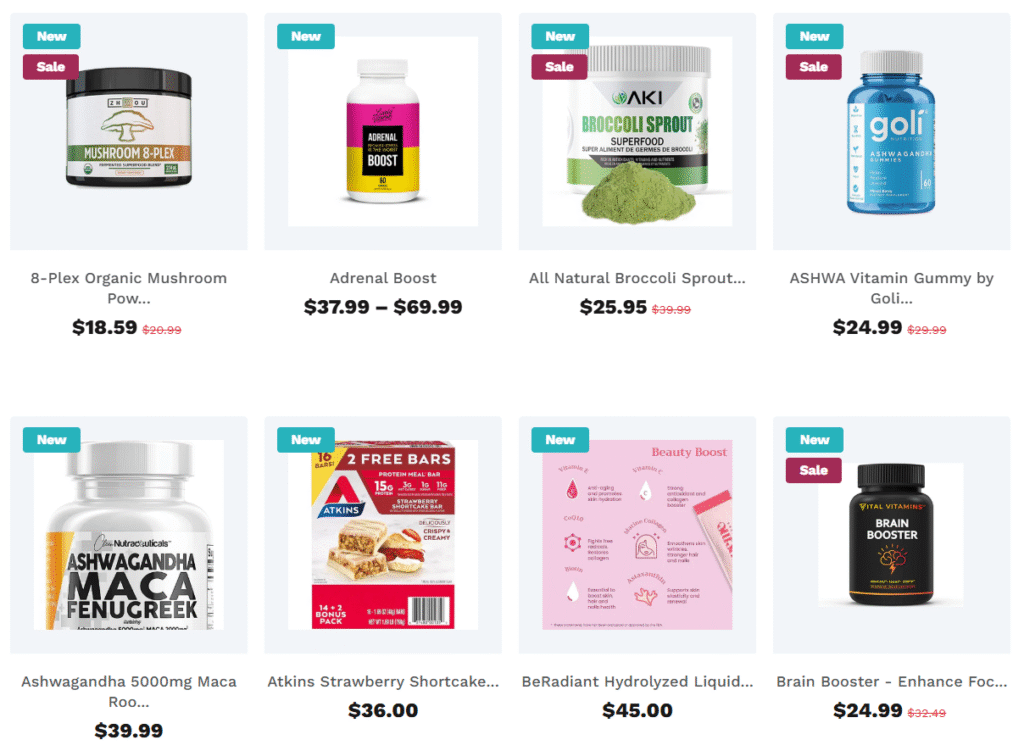
02 📚 Books & Supplements Monthly Picks
03 🏛️ LevelUp Library Full Access
04 🗓️ Weekly Planner Template Exclusive
$67
Per Month · Cancel Anytime
Get Instant Access
No thanks, I'll pass for now