
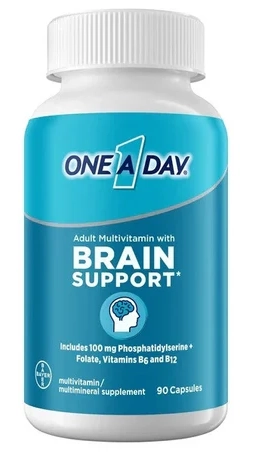

I take a lot of supplements. None of them ever taught me anything. What the good ones did was stop my biology from being the reason a study session fell apart.
Walk down any supplement aisle and the copy is about outcomes. Sharper. Smarter. Focused. The implied promise is that the pill does the cognitive work for you.
It does not. Learning is a method: retrieval, spacing, difficulty, feedback. That is the part that produces the result, and I have written about it a lot. What a supplement can plausibly do is act on the machinery that method runs on. Your attention. Your fatigue. Your sleep.
My reality: on my worst learning days, the problem was never that I lacked a nootropic. It was that I slept five hours, skipped lunch, and then blamed my concentration.
Here is what holds up, with the caveats attached, because the caveats are where the honesty lives.
L-theanine with caffeine. Owen and colleagues tested them separately and together on attention. The combination beat either one alone on attention switching and distractibility. This is the most replicated finding in the whole category, and it costs almost nothing.
Bacopa monnieri. Stough’s trial found improvements in information processing speed, learning rate and memory. The part everyone skips: it took twelve weeks to show up. Nothing happened at two weeks. If you judge bacopa the way you judge caffeine, you will conclude it is inert.
Lion’s mane. Mori’s trial in adults with mild cognitive impairment found scores improved while they kept taking it, and slid back after they stopped. Read that population description again. These were not healthy students. Extending the finding to you is an assumption, not a result.
Creatine. Rae and colleagues found creatine improved working memory and processing speed in vegetarians, whose baseline stores are lower to begin with. Cheapest thing on this list, best evidence base overall, and it is a sports supplement that wandered into cognition.
Rhodiola rosea. Olsson’s group found it reduced fatigue symptoms in people with stress-related burnout. Again, note who was studied. Burned-out people, not rested ones.
Look at those five together and something obvious appears.
Almost every positive result comes from a population with a deficit. Vegetarians low on creatine. People with burnout. Adults with cognitive impairment. The compounds are closing a gap, not adding a capability.
Which means the honest question is not what you should take to learn faster. It is what is currently limiting you, and whether that is something a supplement can even reach.
Usually it is not. Usually it is sleep, or the fact that you are re-reading instead of testing yourself.
That is an uncomfortable answer if you were hoping to solve the problem by buying something. It was uncomfortable for me too. I spent a long stretch adding compounds to a routine when what I actually needed was to go to bed earlier and stop confusing familiarity with knowing something.
Three rules I follow now.
Fix the substrate first. Sleep, food, movement, stress. If any of those is broken, a capsule is decoration. Sleep especially, because that is when memory consolidates. Everything you studied is filed overnight or not at all.
Match the compound to the actual constraint. Jittery from coffee and losing focus by mid-morning? Theanine. Running on fumes after a hard month? Rhodiola. Deliberately studying something over a term? Bacopa, and give it the full twelve weeks. Do not take all of them because a list said so.
Change one thing at a time. If you start four supplements on Monday you have learned nothing by Friday except that you spent money. I run one variable at a time, for long enough to see it.
I want to be specific here, because this is where most supplement writing quietly cheats.
None of these trials tested whether you will learn a language faster, pass an exam, or read more books. They measured attention tasks, processing speed, fatigue scores and memory tests in controlled settings. That is a long way from your Tuesday evening study block.
Effect sizes are generally modest. Several of the studies are small. Some populations do not resemble you at all. And nothing here substitutes for a method, or for sleep, or for actually doing the reps.
If a supplement page promises you a transformation, it is selling past its evidence.
Supplements are the floor, not the ceiling. They can stop your biology from being the bottleneck. They cannot do the learning for you, and anyone telling you otherwise wants your money more than your progress.
Get the method right first. I have written about why the brain limits learning and about what actually wrecks focus after a break, and both of those will move your results further than anything you can swallow.
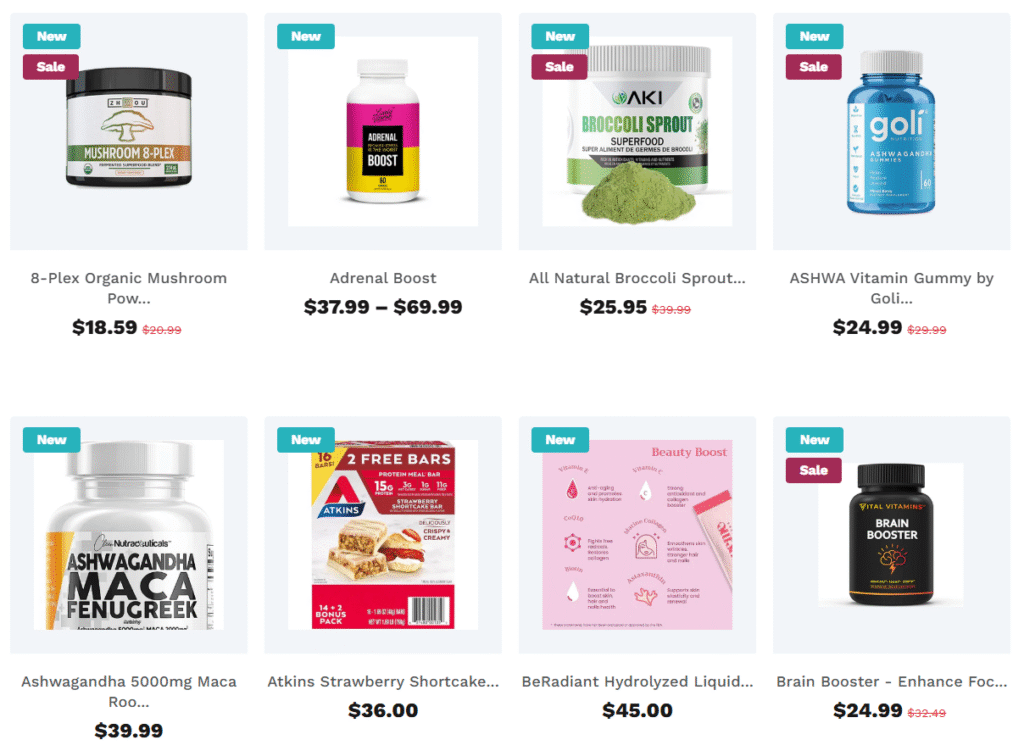
Then, if you want to close a genuine gap, our sister store Level Up Self carries the compounds above with a fuller reference on each one. Start with L-theanine alongside your coffee, or creatine if you want the strongest evidence for the least money.
Level Up Smarter exists to make you a faster, more consistent learner. The supplements are only there to stop your biology getting in the way. Start here if you want the method.
Every DOI below was resolved and checked against the published record before it went in.
This article is educational and is not medical advice. These statements have not been evaluated by the Food and Drug Administration, and these products are not intended to diagnose, treat, cure or prevent any disease. Talk to a qualified healthcare professional before starting any supplement, particularly if you are pregnant, nursing, taking medication or managing a health condition.
Level Up Smarter publishes practical, science-informed strategies for learning faster, focusing longer, and building the skills that matter.
Start Here →Plus one short, useful email from Quincy most weeks on learning faster, focus and the habits that hold it all up. No spam, unsubscribe in one click.

The Level Up list
Learning faster, focus, sleep and the habits that hold it all up, from Quincy. You start with the Consistency Equation. No spam, unsubscribe in one click.

Free guide
Get the Consistency Equation free, plus one short email most weeks on learning faster and sticking with it.