



This article is educational and is not medical advice, and not a substitute for individual care. Supplements interact with medications and medical conditions. Discuss any change with a qualified clinician who knows your history.
You’ve seen the list. Magnesium, zinc, omega-3, L-theanine, a B-complex, something with “focus” in the name. Every roundup of ADHD supplements lands on roughly the same twelve bottles, one Amazon cart, and a quiet hope that the right combination will do what the last combination didn’t.
Here’s the problem with that list: it answers a question nobody should be asking. “What supplements help ADHD?” is a shopping query. The clinical question is narrower and far more useful: what, specifically, is underperforming in this person’s attention system, and can a supplement plausibly move it? Most supplement failures aren’t failures of the molecule. They’re failures of matching, measuring, and method. This article is about the method.
Supplements are not ADHD treatments. At best they remove a constraint that makes ADHD symptoms worse: a nutrient the dopamine pathway needs, a circadian clock that’s drifted, a neuron membrane that isn’t signaling cleanly. If ADHD is significantly impairing your work, relationships, or safety, the evidence-based options are medication, behavioral therapy, and coaching. Supplements sit alongside those, not instead of them.
And they are not inert. Iron is toxic in excess. Zinc suppresses copper absorption. Omega-3 at high doses affects bleeding. Melatonin interacts with several medication classes. Creatine loads the kidneys with work. If you’re pregnant, have a seizure disorder, bipolar disorder, heart or kidney disease, or take psychiatric medication or anticoagulants, talk to your prescriber before starting anything in this article.
Two of the five compounds worth discussing, iron and zinc, have a property the others don’t. You can test for them, and you should, because the same symptom profile means something different depending on the number that comes back.
matters in ADHD for a reason most people don’t expect. The first enzyme in dopamine synthesis, tyrosine hydroxylase, uses iron as a cofactor. When iron stores run low, dopamine production can run low with them, and that shows up as inattention, low drive, and poor emotional regulation rather than the pale, breathless picture most people associate with anemia.
This is where the standard blood panel misleads. Hemoglobin can be normal while ferritin, the storage marker, is depleted. Ferritin is the number that tracks with restless legs, fragmented sleep, and the ADHD-adjacent symptoms above. Ask for ferritin, transferrin saturation, and total iron-binding capacity, not just a full blood count. Iron is worth a conversation if you have ADHD plus restless or twitchy sleep, unrefreshing sleep, a low-meat or vegetarian diet, heavy periods, or a gut condition that affects absorption.
One caution that is not optional: do not supplement iron on a guess. Unlike most vitamins, the body has no efficient way to excrete excess iron. Test first, treat the cause second, and recheck.
Zinc is the quieter one. It modulates dopamine signaling at the synapse and interacts with glutamate systems that govern how “clean” a cortical signal is against background noise. Where iron is about making enough dopamine, zinc is about handling it. The clinical picture where it’s worth checking: prominent impulsivity and emotional reactivity, low protein intake, heavy sweating from training, malabsorption, or a child or teen with a very narrow diet.
The trap with zinc is the assumption that more is better. Sustained high-dose zinc depletes copper and can create a neurological problem you didn’t have before. Anything beyond a short course should be a deliberate decision with your doctor.
if a deficiency can be measured, measure it. Supplementing a nutrient you’re not short of does nothing except introduce risk.
Ask a room of adults with ADHD what time they naturally fall asleep and the answer clusters around one or two in the morning. Delayed sleep phase is close to a core feature of ADHD, not a bad habit layered on top of it. And it compounds: late onset means short sleep, short sleep means worse attention the next day, worse attention means the evening wind-down never happens, and the cycle repeats.
This is the context in which melatonin earns its place. And it’s the context in which it usually fails, because people use it as a sleeping pill. It isn’t one. Melatonin is a darkness signal. It tells the brain’s master clock that night has started. Used as a sedative, taken in a large dose at bedtime, it does very little and makes some people groggy. Used as a clock-shifter, a low dose taken a couple of hours before the sleep time you’re aiming for, it can gradually pull a delayed circadian rhythm earlier.
The evidence for this use is the strongest in this article, and it is specific. A 2025 meta-analysis of twenty-one trials in children with neurological and psychiatric conditions found melatonin reduced the time taken to fall asleep, increased sleep efficiency, and increased total sleep time: and it identified where the benefit concentrates. Maximal efficacy landed between 2 and 4 mg per day, taken about three hours before bedtime. The further ahead of bedtime it was given, the more sleep onset improved; the longer the treatment ran, the more sleep efficiency and total sleep time improved. Low and early beat high and late, and most supermarket bottles are dosed well above the useful range. Confirm timing and dose with your prescriber, especially for children.
if the problem is when you fall asleep rather than whether you can, you have a circadian problem, and the tool is timing, not sedation.
Neurons talk through membranes, and membranes are made of fat. The fatty acids in the diet become the fatty acids in the neuron, and that affects how fluid the membrane is, how receptors sit in it, and how efficiently signals cross it. Omega-3 fatty acids, specifically the EPA and DHA found in oily fish, are the supplement that targets this layer.
Omega-3 has more ADHD research behind it than anything else in this article, and the popular summary of that research is now out of date. The version you will hear repeated is that omega-3 produces a small but real improvement in attention, and that you should buy a formula weighted toward EPA. That came from a 2011 meta-analysis of ten trials, and it was a reasonable read of the evidence available in 2011.
It is not what the current evidence says.
The largest and most recent meta-analysis pooled twenty-two randomized controlled trials and 1,789 participants, and it was designed specifically to test the dose and composition questions the earlier work raised. Across all trials, omega-3 did not significantly improve core ADHD symptoms: a standardized mean difference of −0.16, with a confidence interval running from −0.34 to 0.01, which crosses zero. Neither a high EPA dose nor a high EPA-to-DHA ratio predicted benefit. The thing everybody has been told to shop for turned out not to be the variable.
One subgroup did separate from placebo: trials that ran at least four months (SMD −0.35). Not a particular formula. Not a particular ratio. Duration.
That reframes the whole purchase. If you buy an expensive high-EPA formula and stop after eight weeks because nothing happened, you have run the version of the experiment that the evidence predicts will fail. If you take an ordinary dose for a season while eating more fish, you have run the version that showed an effect. The authors are careful about their own result: the subgroup analyses were small and heterogeneity was moderate: and that caution is part of the finding, not a footnote to it.
with omega-3, duration is the active ingredient. Expect a nudge, not a switch, and judge it at four months or not at all.
The first three questions all had a target: a nutrient you can measure, a clock you can shift, a membrane you can change. The fourth is the category everything else falls into: the supplements that support the system generally rather than correcting a specific fault. This is where most of the twelve bottles live, and where the evidence gets thinnest.
That does not make them worthless. It makes them a different kind of bet, and the honest thing is to grade them.
Magnesium has the most interesting split. Children with ADHD do measurably have lower serum and hair magnesium than controls: that association is real and replicated. But the treatment evidence does not follow from it. Systematic reviews reach the same conclusion repeatedly: the trials are small, short, methodologically mixed, and contradictory, and magnesium is not recommended as an ADHD treatment on current evidence. There are no well-designed trials in adults at all. A deficiency association is not a treatment result, and the gap between those two things is where most supplement marketing lives.
L-theanine rests on two studies. One gave 400 mg daily for six weeks to 98 boys aged 8 to 12 with ADHD and found improved sleep efficiency: though not every sleep measure moved. The other found improved sustained attention and inhibitory control, but only for L-theanine combined with caffeine, not L-theanine alone. For core ADHD symptoms on its own, the evidence is effectively absent. If you drink coffee, the combination is the version with support behind it.
A B-complex is a general-metabolism play. Adults with ADHD show lower concentrations of B2, B6 and B9 in observational work, but supplementation trials in people who eat a normal diet and have no deficiency have not demonstrated ADHD symptom benefit. Correct a measured deficiency; do not expect a B-complex to do anything else.
Creatine addresses the energy side. The prefrontal cortex, where planning, inhibition, and working memory live, is expensive tissue to run, and creatine supports the phosphocreatine system that regenerates ATP under high demand. Be clear-eyed: creatine has not been studied as an ADHD treatment in any robust way. The cognitive research covers healthy adults under sleep deprivation, vegetarians with low baseline creatine, and older adults, and shows modest gains in memory and processing speed. The ADHD case is mechanistic and inferential: if sustaining effort is the constraint, supporting the energy system behind effort is a rational thing to trial. That is a weaker standard than melatonin’s, and you should hold it to that standard. Kidney function should be checked before starting.
these support, they do not correct. Add one at a time, give it a defined window, and drop anything that cannot show you a result you can point at.
Go back to the twelve-bottle cart. Every bottle in it might be “a good supplement for ADHD” in the abstract. Almost none of them are good for a specific person on a specific day, because nobody checked which constraint was actually binding.
The people who get results from supplements are not the ones who found the best list. They’re the ones who asked a narrower question, tested what could be tested, changed one thing at a time, gave it long enough to matter, and tracked something concrete: sleep onset time, a symptom scale, the number of tasks finished before three o’clock. That’s not a supplement strategy. It is the same habit that separates people who actually learn from people who only feel like they are: testing yourself instead of reviewing works because it produces information rather than familiarity, and so does this. That’s a diagnostic habit, and it works whether the eventual answer is ferritin, melatonin timing, or a medication review.
Don’t buy anything yet. Pick the one question above that describes you most closely, and take it to your doctor with a specific request. If it’s question one, ask for ferritin, transferrin saturation, and zinc. If it’s question two, ask about a low-dose, early-timed melatonin protocol. If it’s three or four, ask whether a supervised trial makes sense alongside what you’re already doing. One question, one test, one variable. Then decide.
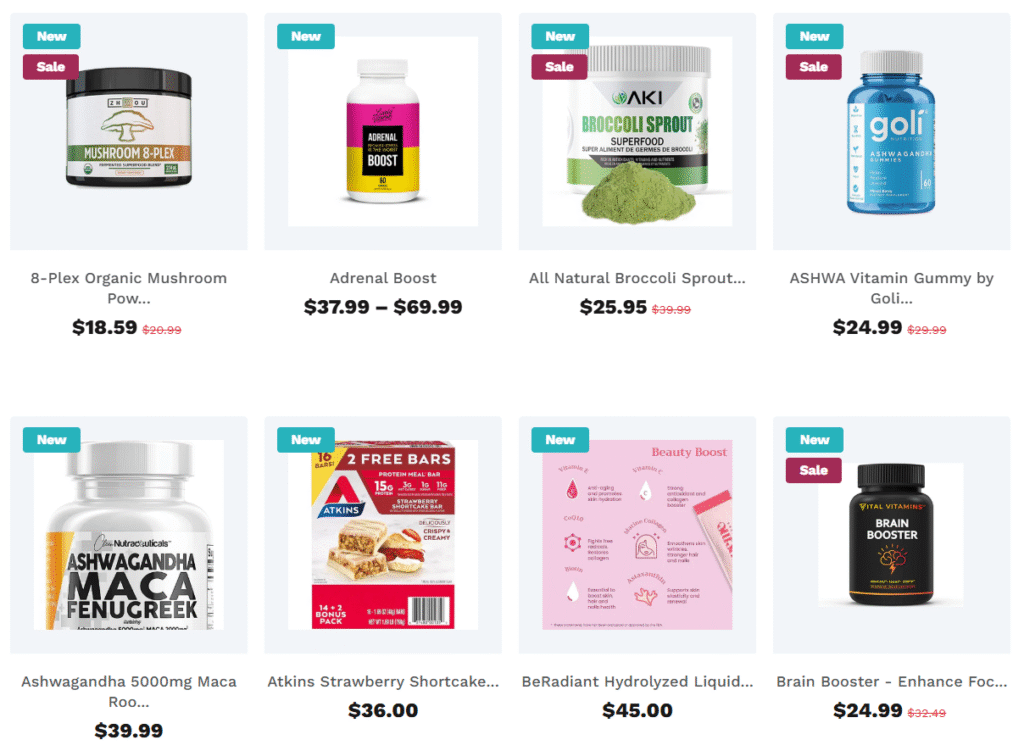
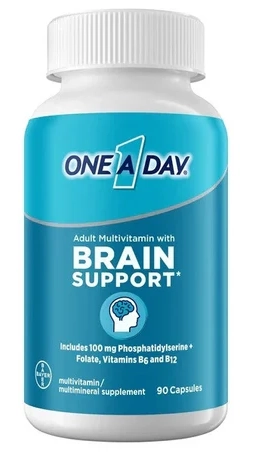
If a question above pointed somewhere specific, these are the products behind it. Test first where a test exists: iron and zinc are deliberately not on this list, because those two should follow a blood panel and a conversation with your doctor, not a purchase.
More on how these are evaluated: levelupself.com/pages/research.
Every number above comes from one of these. Where the article infers from adjacent literature instead of measuring in ADHD, it says so in the text and again here.
84(5):22r14772: meta-analysis of 22 RCTs, 1,789 participants. doi.org/10.4088/JCP.22r14772 · PubMed
84:102158: systematic review and meta-analysis of 21 studies. doi.org/10.1016/j.smrv.2025.102158 · PubMed
systematic review and meta-analysis. doi.org/10.1371/journal.pone.0169145
Adolescent Medicine* 158(12):1113–1115: case-control, 53 children with ADHD. doi.org/10.1001/archpedi.158.12.1113
10:13072: proof-of-concept neuroimaging RCT. doi.org/10.1038/s41598-020-70037-7
Alternative Medicine Review 16(4):348–354: randomized, double-blind, placebo-controlled, 98 boys aged 8–12. That journal never registered DOIs, so it is identified by PubMed ID: PubMed 22214254
a meta-analysis of magnesium status, not of treatment. doi.org/10.1016/j.psychres.2019.02.043
2(6):377–384: observational, and the reason the B-complex claim here is an association rather than a result. doi.org/10.1192/bjpo.bp.116.003491
108:166–173: healthy adults, not ADHD. The ADHD case in this article is explicitly inferential. doi.org/10.1016/j.exger.2018.04.013
Two caveats worth repeating, because they change how much weight the numbers carry. The melatonin review covers pediatric neurological and psychiatric conditions broadly rather than ADHD alone, and several of its authors declare industry interests. And the older omega-3 advice everyone still repeats: that high-EPA formulas are what works, from Bloch & Qawasmi (2011): did not replicate in 2023. Duration did.
This article is educational and is not medical advice, and not a substitute for individual care. Supplements interact with medications and medical conditions. Discuss any change with a qualified clinician who knows your history.
Level Up Smarter publishes practical, science-informed strategies for learning faster, focusing longer, and building the skills that matter.
Start Here →Plus one short, useful email from Quincy most weeks on learning faster, focus and the habits that hold it all up. No spam, unsubscribe in one click.

The Level Up list
Learning faster, focus, sleep and the habits that hold it all up, from Quincy. You start with the Consistency Equation. No spam, unsubscribe in one click.

Free guide
Get the Consistency Equation free, plus one short email most weeks on learning faster and sticking with it.