

Not another textbook.
Not another worksheet.
Not another person telling me to “try harder.”
I wanted something more practical than that.
I wanted a system.
I wanted to know how to focus when my mind was scattered. I wanted to know how to remember what I read. I wanted to know how to practice without wasting time. I wanted to know how to stop procrastinating and actually use what I was learning.
At the time, I did not have the words for it.
Years later, I heard people like Ali Abdaal talk about learning how to learn as a meta-skill.
That phrase made sense immediately.
A meta-skill is a skill that helps you build other skills. Learning how to learn is one of the most powerful meta-skills because it compounds. Once you become a better learner, everything else becomes easier to improve: business, health, marketing, money, communication, leadership, writing, technology, relationships, and personal development.
That idea became one of the foundations of Level Up Smarter.
And it is the reason I created the Level Up Smarter Starter Pack.
I wanted to build the learning toolkit I wish I had when I was younger.
Most people think they are bad at learning.
But in many cases, that is not the real issue.
The real issue is that they do not have a repeatable learning system.
They read books but forget most of what they read.
They buy courses but do not finish them.
They watch tutorials but never apply the lesson.
They start learning a skill, get overwhelmed, and jump to something else.
They consume more and more information, but their life does not visibly change.
That is not always a motivation problem. It is often a structure problem.
The science of learning supports this. Cognitive Load Theory, originally developed by John Sweller, explains that working memory has limited capacity. When learning materials are disorganized, overloaded, or too complex, learners spend mental energy managing the information instead of building usable understanding. Sweller’s work argued that conventional problem-solving can consume cognitive capacity that would otherwise support schema acquisition: the mental structures that help us actually understand and use knowledge.
In simple terms: when your learning process is messy, your brain gets overloaded.
That is why “just learn more” is not always the answer.
Sometimes the answer is:
Learn less at once.
Sequence it better.
Retrieve it more often.
Apply it faster.
Track it more clearly.
That is what a learning system is supposed to do.
Most of us were trained to confuse exposure with learning.
We think we learned something because we watched the video.
We think we learned something because we highlighted the paragraph.
We think we learned something because we understood the idea while reading it.
But understanding something in the moment is not the same as being able to remember it, explain it, or use it later.
That difference matters.
A major review by Dunlosky and colleagues evaluated common learning techniques and found that practice testing and distributed practice had especially strong utility because they worked across different learners, materials, and learning conditions. Lower-impact techniques included habits many people rely on heavily, such as highlighting and rereading.
That is a big shift.
Most people spend their learning time rereading, rewatching, saving, highlighting, and collecting.
But better learning comes from retrieving, spacing, explaining, practicing, and applying.
That is the difference between consuming information and converting it.
Learning how to learn matters because it improves almost everything else you do.
If you can learn faster, you can adapt faster.
If you can retain more, you waste less time relearning the same things.
If you can focus longer, you can produce better work.
If you can apply knowledge quickly, you turn ideas into results instead of letting them sit in a notebook.
The National Academies’ How People Learn II emphasizes that learning is shaped by many factors, including prior knowledge, motivation, context, memory, and self-regulation. In other words, learning is not just about receiving information. It is about how the learner organizes, connects, practices, and uses that information over time.
This is why Level Up Smarter is not just about reading more books or buying more courses.
It is about building the operating system behind your learning.
The question is not just:
“What should I learn?”
The better question is:
“How do I turn what I learn into skill, action, and progress?”
That is the question behind the Level Up Smarter Starter Pack.
One of the most useful ideas in learning science is the testing effect.
The testing effect means that trying to recall information strengthens memory more than simply reviewing it again.
Roediger and Karpicke’s research on test-enhanced learning found that taking memory tests does more than assess what someone knows. It can improve long-term retention. Their work showed that retrieval itself is a powerful learning event.
This is why “teach-back” is such an important part of the Level Up Smarter method.
When you explain something in your own words, you reveal what you actually understand.
You also reveal where the gaps are.
That is a good thing.
A gap is not a failure.
A gap is feedback.
If you read a chapter and cannot explain the main idea clearly, you now know exactly where to go back.
If you watch a lesson and cannot summarize the action step, you know you did not convert the lesson yet.
If you learn a strategy but cannot use it in real life, the learning is still incomplete.
This is why one of the simplest learning rules is:
Do not just review. Retrieve.
After every learning session, ask:
What did I just learn?
Can I explain it simply?
Where could I use this?
What is the next action?
That process turns learning from passive consumption into active construction.
Another powerful principle is distributed practice, often called spaced repetition or spaced learning.
Instead of trying to learn everything in one intense session, distributed practice spreads learning over time.
Dunlosky and colleagues rated distributed practice as a high-utility technique because it benefits learners across many contexts.
This matters because many people try to learn in bursts.
They get motivated, watch five hours of content, take pages of notes, and then disappear for two weeks.
That feels productive, but it often does not stick.
Learning compounds better when it is repeated, spaced, and revisited.
That does not mean you need a complicated system.
It can be simple:
Learn today.
Review tomorrow.
Use it within 48 hours.
Teach it back later in the week.
Revisit it next week.
Apply it in a new context.
That kind of rhythm gives your brain more opportunities to strengthen the memory.
Here is one of the biggest differences between learning for entertainment and learning for transformation:
Transformation requires application.
You can read a business book and feel inspired.
You can watch a productivity video and feel motivated.
You can listen to a podcast and feel smarter.
But if nothing changes after the content ends, the learning did not convert.
That is why Level Up Smarter uses what I call the 48-Hour Execution Window.
The idea is simple:
After you learn something useful, apply one part of it within 48 hours.
Not someday.
Not eventually.
Within 48 hours.
If you read about writing better headlines, write five headlines.
If you learn a new focus method, test it tomorrow morning.
If you study sales, use one idea in a message.
If you learn about fitness, adjust one workout.
If you learn about money, review one expense category.
The action does not have to be big.
It has to be real.
This matters because application forces the brain to organize knowledge differently. Instead of storing an idea as something you recognize, you begin turning it into something you can use.
That is the point of learning.
Most people separate focus and learning.
But they are connected.
You cannot learn deeply if your attention is constantly fractured.
Every notification, open tab, and context switch adds friction. Even if you technically “study” for an hour, the quality of that hour changes dramatically depending on whether your attention is stable or scattered.
This is another reason structure matters.
The goal is not to rely on willpower.
The goal is to design your environment so learning is easier to start and easier to continue.
A good focus system answers:
Where will I learn?
When will I learn?
What will I work on first?
What distractions do I need to remove?
How long is the session?
What action will I take when the session ends?
The Level Up Smarter Starter Pack includes a Focus Framework because learning is not only about memory. It is also about attention.
If attention is the doorway, learning is what happens after you walk through it.
The Starter Pack came from a personal question:
What would I give my younger self if I could hand him a learning toolkit?
The answer was not a giant 40-hour course.
It was not a motivational speech.
It was not another pile of content.
It was a simple toolkit.
Something practical.
Something organized.
Something that could help someone build momentum quickly.
I wanted it to help with the real problems people face when they try to improve:
I do not know where to start.
I cannot stay focused.
I forget what I read.
I buy courses but do not finish them.
I overthink instead of taking action.
I start strong and fall off.
I have ideas but do not execute.
That is why the Starter Pack is built around the full learning cycle:
Focus.
Learn.
Retrieve.
Apply.
Review.
Plan.
Repeat.
The Level Up Smarter Starter Pack is a practical mini-library designed to help you stop consuming information and start converting it into progress.
Here is what is included.
This is the foundation.
It helps you define what you are learning, why it matters, how to structure your week, and how to avoid information overload.
Most people fail because they start with random content.
This guide helps you start with a system.
This introduces the core method behind better learning.
You learn how to approach skills, how to avoid passive consumption, how to think about retention, and how to turn lessons into action.
This helps you build repeatable deep work blocks.
You will learn how to reduce distractions, choose your best learning window, and make focus easier to repeat.
This helps you read with purpose.
The goal is not to finish more books just to say you finished them.
The goal is to extract useful ideas, remember them, and apply them.
This is a one-week reset for people who feel scattered.
It helps you pick one learning goal, clear the noise, rebuild momentum, and take action quickly.
This helps you organize your learning week.
You can track what you are learning, what you practiced, what you reviewed, and what you applied.
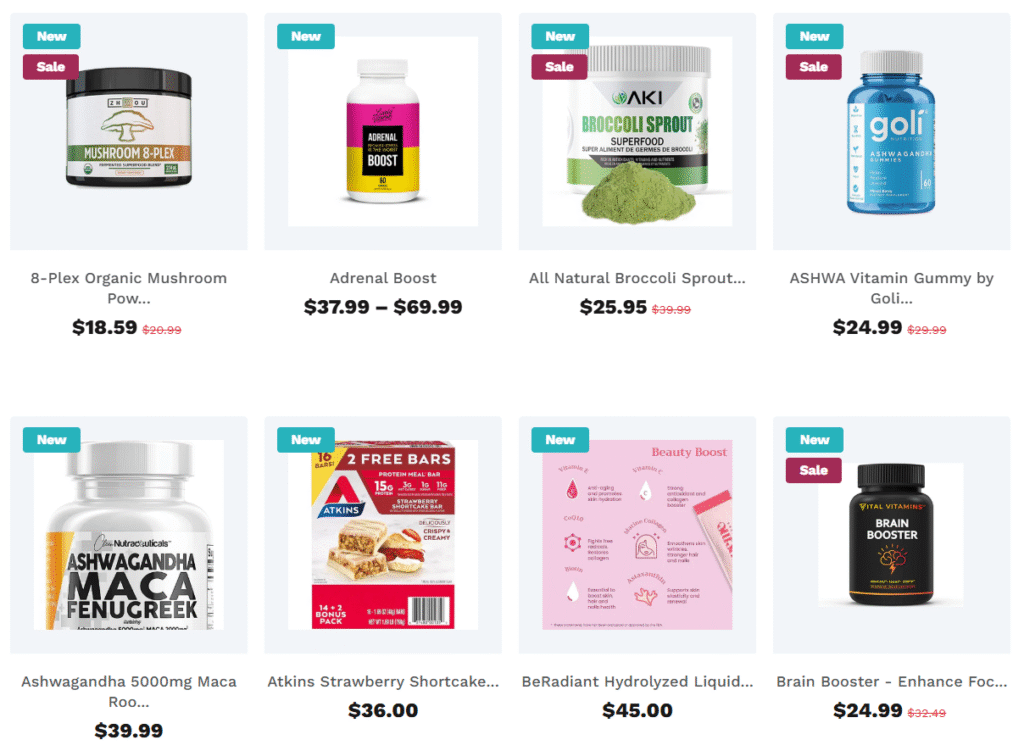
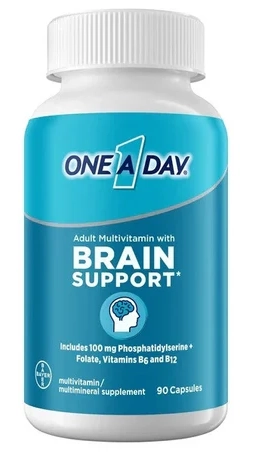
This guide covers energy, environment, timing, routines, and optional supplement support.
The point is not to depend on supplements.
The point is to build the conditions that make focus easier.
This helps you break the loop of saving, planning, and overthinking.
It gives you a simple path back into motion.
The Starter Pack is for people who know they are capable of more but feel scattered.
It is for entrepreneurs who need to learn faster because business keeps changing.
It is for students who want better study systems.
It is for creators who need to build skills consistently.
It is for employees who want to become more valuable.
It is for lifelong learners who are tired of forgetting what they read.
It is for anyone who has ever thought:
“I know I can do more. I just need a better system.”
The internet gave us unlimited access to information.
But access is not the same as transformation.
You can save a hundred videos and still not change.
You can buy a dozen courses and still not build the skill.
You can read every productivity book and still feel stuck.
The missing piece is conversion.
Convert information into understanding.
Convert understanding into action.
Convert action into skill.
Convert skill into results.
That is the Level Up Smarter standard:
Stop consuming. Start converting.
I built the Level Up Smarter Starter Pack because it is the toolkit I wish I had when I was younger.
A simple way to start.
A practical way to focus.
A better way to read.
A system for remembering.
A push toward action.
A reset for people who feel overwhelmed.
The Starter Pack is available now for $27 and includes the full practical mini-library.
Get the Level Up Smarter Starter Pack here
Learn faster. Focus longer. Finish what you start.
